
AD
Not every HDB flat is a forever home. Maybe you’ll sell after the MOP, or upgrade when your lifestyle (or the property market) shifts. When that day comes, the same renovation choices that once made your flat uniquely yours could be the very things that give buyers pause.
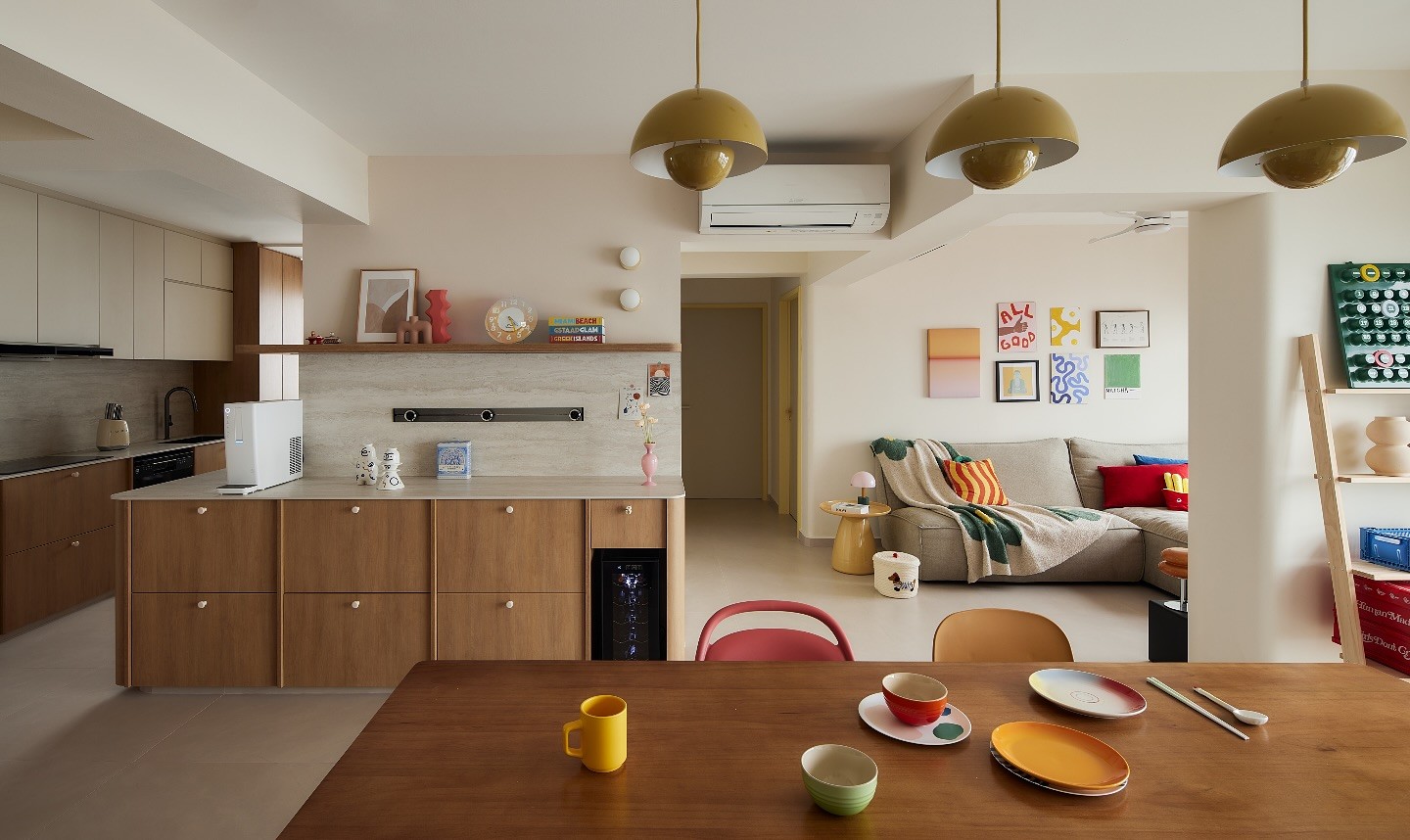
I’m not saying you should live in a soulless, showroom-style box. Your flat should still reflect who you are. But if you’re pouring tens of thousands into your home reno, it’s worth thinking ahead. Some design decisions are easy for future buyers to live with. Others? They'll just see $$$ signs flashing in their heads for hacking, repairing and re-renovating.
If there's a chance you're thinking of selling your HDB down the road, here are some renovation and design choices that could hurt your flat’s resale appeal (and what you can do instead to balance personality with practicality).
1. High-maintenance designs and finishes
Marble countertops, natural wood floors, mosaic tiles, rows of open shelving, full glass panels, and fluted walls look and feel amazing. But the reality? They’re high-maintenance, and future buyers know it.
Marble gives you that atas hotel vibe, but it stains easily (think curry or red wine) and needs regular sealing. Natural wood floors look warm and luxe, but in our climate, they can warp if not meticulously maintained. Tiny mosaic tiles mean endless grout lines that trap dirt and need scrubbing. Open shelves? Dust magnets. Glass panels streak at every fingerprint. And fluted walls collect lint and grime in every groove.
Instead, try this: Choose smarter lookalikes that give you style without the upkeep. Woodgrain vinyl mimics timber beautifully but won’t warp. Quartz or sintered stone surfaces look like marble but resist stains. Large-format tiles cut down on grout lines. For glass, consider half-wall partitions (solid at the bottom, glass at the top) to reduce smudges while still letting in light. Mix open shelving with closed cabinets for balance. If you love fluted walls, limit them to a feature section, or explore textured paint and wallpaper for extra dimension.
Design: Happe Design Atelier
2. Layouts that try too hard
It’s tempting to shake up HDB layouts, especially since they can feel cookie-cutter. But some changes that work for your lifestyle may not have resale appeal.
Over-hacking for open plans makes a home feel cavernous but impractical for most families. Splitting a bedroom into two tiny cubicles creates awkward, cramped spaces. Turning the living room into a bedroom, shifting sinks outside bathrooms, or turning service yards into pantries may suit you now, but buyers often just see reinstatement costs.
Instead, try this: Keep changes flexible and reversible. Sliding partitions or foldable glass doors can create study corners or play zones without locking the layout. Modular furniture like Murphy beds or fold-down desks lets you adapt spaces without permanent alteration. In bathrooms, wall-hung vanities and mirrored cabinets add storage without needing you to move out the sink for more space. For service yards, compact laundry systems help you maximise the space without losing its original use. And if you crave open-concept living, at least keep one proper bedroom layout intact to safeguard resale.
Design: Salt Studio
3. Carpentry overkill
A wall of bookshelves for your personal library, a raised platform that serves as your Japanese style tea room, a custom shrine, a curved planter box, or a row of display cabinets sized precisely for your figurine collection… these are the things that make your home perfectly tailored to you. But they make it hard for future buyers to imagine their own lives in the flat. The more “specific” your built-ins are with dedicated purposes, the less adaptable the space becomes. And let’s be real: hacking away bespoke carpentry is not cheap.
Instead, try this: Stick to “universal” carpentry like wardrobes, shoe cabinets, kitchen cupboards, and bathroom vanities and keep hobby-specific needs modular and off-the-rack. Freestanding shelves (like IKEA Kallax or Muji units) or flexible shelving systems with adjustable panels provide storage now but can be repurposed later. This way, your home works for you while staying adaptable for resale.
Design: Intr
4. Trend-heavy designs
Features like patterned floor tiles, cave-like walls, or archways everywhere may scream “magazine-worthy” today, but they also date very quickly. Trends move fast, and what feels chic now can look passe in just five years. Plus, ornate details are usually expensive to install and expensive to undo. Buyers often don’t want to pay for something that locks them into a specific aesthetic.
Instead, try this: Keep the “bones” of your flat simple and timeless, then layer on trendy elements through loose furniture, lighting, or decor. For instance, instead of hacking archways into every doorway, consider using arched mirrors or furniture pieces with curves. If you love patterned tiles, restrict them to a small feature wall or backsplash that can be swapped out more easily. This way, you get your style fix without saddling the next owner with a full-blown trend capsule from 2025.
Design: Comfort Home Interior
5. Too much storage
It’s natural to want more storage in an HDB, but you can definitely have too much of a good thing. Rows of overhead cabinets in every room, floor-to-ceiling cupboards that make the space feel like a warehouse, or a raised platform that turns your bedroom into a giant storage box can all make the flat feel smaller and more cluttered. Instead of appreciating the extra storage, buyers are more likely to see future hacking costs and a space that feels cramped rather than spacious.
Instead, try this: Strike a balance. Plan storage in key “always useful” zones like the kitchen, bathrooms, and bedrooms, but resist the urge to plaster every available wall. Use hidden or dual-purpose solutions like ottomans with storage, benches with lift-up lids, beds with drawers to add function without overwhelming the flat. And remember: empty space is also valuable. A flat that feels airy and spacious sells much better than one crammed with cabinetry.
Design: Space Factor
Searching for an interior designer for your home renovation? You've come to the right place. Just fill out the form here and we'll connect you with up to 5 recommended firms that fit your needs perfectly.
6. Unusual colour schemes
That all-black kitchen or Barbie-pink living room may feel perfectly you, but for most buyers, they’re instant deal-breakers. Yes, paint is easy to change, but first impressions matter. Many buyers can’t see past a bold colour choice, and even if they can, they’ll mentally add “repainting” to their to-do (and to-pay) list.
Instead, try this: Stick with neutral backdrops, like whites, greys, light wood tones, or soft earthy shades, and bring your personality through various accents in your furnishings, whether it’s that bright orange sofa or bold green curtains. Even a large artwork can make a strong statement without having to paint your walls. If you must have colour on your walls, go for muted, versatile shades (like sage green or dusty blue) that feel calming rather than overwhelming.
Design: Kinjo Studios
7. Premium features that backfire
Dedicated beverage centres with wine chillers and a coffee bar? Spa-like bathrooms with oversized bathtubs? Smart home systems with all the bells and whistles? They sound super glam, and yes, your guests may be impressed—just that one time. After that, they’re just extra things to upkeep.
Instead, try this: Focus on timeless upgrades with everyday appeal. Think rain showers, quality built-in ovens, soft-close drawers, pull-out pantries, or layered lighting that creates a cosy, flexible atmosphere. These feel premium but stay practical. If you want a touch of indulgence, keep it portable, so you can bring it to your next home too.
Design: Yang's Inspiration Design
Final thoughts: At the end of the day, your HDB flat is your home (at least for the next 5 years) and it should reflect your needs and style. But if you want to avoid painful regrets later, keep resale in the back of your mind. The safest approach is to keep permanent reno choices simple, functional and neutral. Then, go wild with things you can change or take with you.


Why I Keep Buying Properties in Johor Bahru — And You Might Want to Consider It Too
Most people spend years researching, saving, and waiting for the “perfect” moment to invest in real estate — only to never buy at all. John, a Malaysian property agent and investor, took a very different route: instead of waiting, he jumped in fast. And now, with seven properties in Johor Bahru (JB) under his belt, he’s not slowing down anytime soon.We spoke to John to learn why JB remains his investment turf, how he got started, and what he wishes more people understood about building a propert

How the New Prime Location Public Housing (PLH) Model Will Impact You as a Buyer or Seller
In October 2021, the Ministry of National Development (MND) and the Housing & Development Board (HDB) introduced the Prime Location Public Housing (PLH) model after extensive consultations with the public and industry experts. This new approach aims to keep public housing in Singapore’s most sought-after areas affordable and accessible for Singaporeans.What’s Different About the PLH Model?The PLH model changes several key rules to better manage demand and maintain affordability in prime location

HDB Support for Young Couples Buying Their First Home in 2026—What You Need to Know
Buying a first home as a couple is a huge milestone. It’s about creating your shared future, setting up your own space, and laying the foundation for family life. But in Singapore, it often feels like a daunting financial challenge. Between wedding costs, early-career salaries, and renovation expenses, many young couples wonder if homeownership is even possible when they’re just starting out.

The 2026 Guide to Affordable Housing in Malaysia: What You Need to Know
Even as Malaysia moves deeper into 2026, affordable housing remains one of the country’s most pressing challenges. For many young professionals, newly married couples, and middle-income families, the dream of owning a home feels increasingly out of reach. Despite some signs of price stabilisation, the gap between income levels and property prices—particularly in urban centres—continues to grow.In response, the Malaysian government has stepped up its efforts under the MADANI Economy framework and

The Hidden HDB Terraces You Never Knew Existed in Queenstown From Just $1.5M
If you love the charm of a landed home but not the sky-high prices that usually come with it, you might be surprised to learn that Queenstown offers an alternative — and at a fraction of the cost. Tucked discreetly within one of Singapore’s most mature towns are rare HDB terrace houses that let you enjoy the landed lifestyle without a multimillion-dollar price tag.A while ago, we featured Queenstown’s private landed homes that can go up to $12 million. Beautiful, yes — but hardly within reach fo

How to Calculate Your Home Loan Affordability in Singapore: A Practical Step-by-Step Guide (2026)
Buying a home in Singapore is an exciting milestone, but it can quickly become a financial strain if affordability is not calculated properly. Many people assume that once a bank or HDB approves their loan, they are safe. The truth is, approval doesn’t necessarily mean you should take on the full loan amount.

Do Primary Schools Really Drive Condo Prices in Singapore? These 6 Projects Say Not Always
When purchasing property in Singapore, many buyers and investors often prioritise proximity to primary schools. Even if they have no children or are not planning to enrol them yet, the prevailing belief is that condos near reputable schools enjoy better resale and rental prospects. But is this always true? Must a project without a nearby primary school struggle to perform? And if you personally don’t need schools nearby, is it safe to disregard this criterion?Interestingly, some condos have main

Are Singapore’s Oldest HDB Flats Losing Value? A 2026 Update
Singapore’s Housing & Development Board (HDB) flats have long been a stable part of the property market, but the question on many minds is whether the oldest units are finally starting to lose value. After all, these flats aren’t getting any younger, the SERS program has mostly concluded, and the VERS initiative looms on the horizon.Back in 2018, the government made waves by pointing out that even flats over 50 years old could still appreciate. Fast forward to 2026, and it’s worth revisiting the

Your 2026 Guide to Buying an Executive Condominium (EC) in Singapore
Executive Condominiums (ECs) continue to be one of Singapore’s most attractive housing options, especially for buyers who want the perks of condo-style living at a more accessible price point. As we move through 2026, interest in ECs remains strong, boosted by steady demand from HDB upgraders and the limited supply of new launches each year.In recent years, EC projects have consistently performed well at launch. Lumina Grand EC, for instance, achieved impressive sales shortly after its release,

Coastal Cabana EC Set to Stir the Market: A Rare Pasir Ris Launch with Strong Family Appeal
For the first time in more than ten years, Pasir Ris is welcoming a brand-new Executive Condominium (EC) — and it is already generating strong interest among homebuyers looking for a lifestyle-centric address in the East. The project, now officially known as Coastal Cabana, arrives at a time when EC launches have been limited, especially in established neighbourhoods with a close-knit community feel.

Singapore’s Most Expensive Neighbourhoods Evolve: 4 Key Buyer Trends Shaping the CCR in 2026
In the early 2000s and before, purchasing a condo in Singapore’s Core Central Region (CCR) was largely reserved for the ultra-wealthy or affluent foreign investors. For the average Singaporean, owning a CCR property was almost unattainable — akin to indulging in luxury items that felt out of reach. But fast forward to 2026, and the real estate landscape is noticeably different.The price gap between the Rest of Central Region (RCR) condos, and in some cases even the Outside Central Region (OCR) c

I bought a freehold property in Singapore and regret it - here's the big mistake I made
Many Singaporean homebuyers, especially from older generations, have traditionally favoured freehold properties. The appeal is clear: a sense of permanence, the idea that their children or grandchildren will benefit from the investment, and years of advice reinforcing that freehold trumps leasehold. However, recent experiences from homeowners reveal that paying a freehold premium doesn’t always guarantee higher returns.A freehold property that didn’t outperformTY and her husband purchased their


