
AD
Historically associated with sailors reacting to the pitch, roll and yaw of ships, motion sickness now affects people in cars, trains, planes and even in space. The symptoms can start within minutes of feeling movement and last for hours after it stops. Classic motion sickness often begins with feeling warm, sweaty and dizzy. You might also develop a headache or feel fatigued. As the condition worsens, nausea sets in and can lead to vomiting. While motion sickness is generally temporary, it can hold you back from travelling and other activities you enjoy, sometimes in life-changing ways.
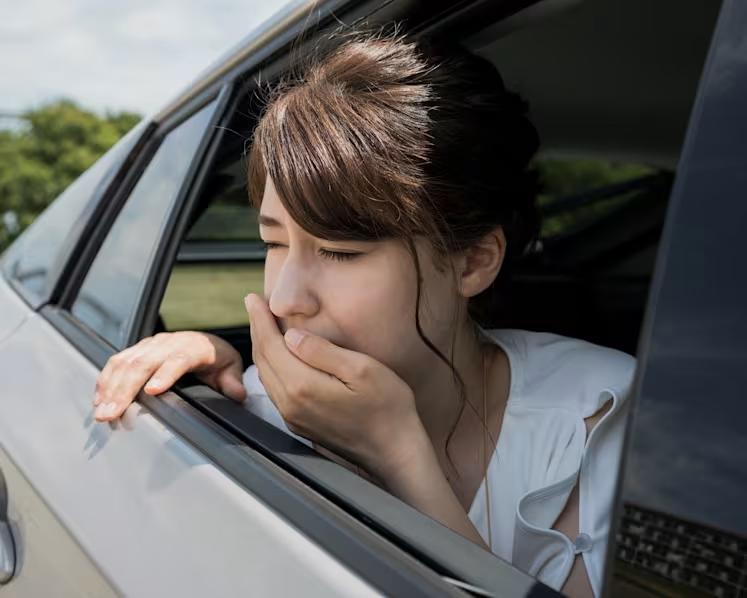
James Phillips, a vestibular neurophysiologist at the University of Washington, said he had planned to be a marine biologist until he spent time on a research expedition vomiting over the side of the boat. "I just couldn't tolerate it, so I abandoned that career ambition," he said. We asked experts what's behind motion sickness and which of the products to treat or prevent it — from glasses and bracelets to medications — really work.
Why do people react this way to motion?
Scientists don't know exactly what causes motion sickness, but one theory is that it's the body's reaction to conflict between different senses. If you're reading in a car, for example, your eyes see a stationary page. But the parts of your inner ear that detect acceleration and rotational motion sense you're moving, even if you're not aware of it, said Paul DiZio, a cognitive neuroscientist at Brandeis University.
A newer theory among many researchers, DiZio said, is that motion sickness results from a mismatch between what your brain expects your senses to detect and what they do detect. Even before a motion occurs, "you build a little model in your brain of how it's going to feel," he said, and you get sick if what you sense doesn't fit those predictions. It's unclear why some people react with motion sickness, but some scientists think the brain interprets inconsistency as resulting from a neurotoxin, and sets off vomiting in response.
Most people experience some motion sickness from extreme motion, but some also react to milder movements. Children are generally more susceptible than adults, possibly because they have not yet become habituated to such movements. Women are more at risk than men, most research suggests. One study estimated that genes account for 57 per cent to 70 per cent of a person's susceptibility to motion sickness.
Dr Kristen Steenerson, a vestibular neurologist at Stanford University School of Medicine, said you're more likely to get motion sickness if you have migraines. In particular, people with vestibular migraines — who experience vertigo or dizziness, along with some migraine symptoms, sometimes without a headache — may get sick watching an action movie, unloading the dishwasher or even reading while sitting still, she said.
How can I prevent motion sickness?
Over-the-counter medications, including antihistamines like Dramamine and Bonine, are effective but they should be taken before motion starts, Steenerson says, and they can have side effects, like drowsiness. Scopolamine, a patch worn behind the ear, helps some people but can also come with side effects such as dry mouth, and isn't recommended for children or older adults. Last year, the US Food and Drug Administration approved a new prescription drug, Nereus, that targets different receptors in the brain to prevent motion-induced vomiting and may have fewer side effects, Phillips said.
There are also behavioural approaches that may help prevent motion sickness. If you're in a car, driving may reduce symptoms because you're in control of your environment. If you're a passenger, Steenerson said, sitting toward the centre of the car and keeping your eyes on the road can help. Dr Erich Voigt, an otolaryngologist at NYU Langone Health, recommends staying toward the centre of planes and above deck on boats, where you can see the horizon.
Controlled breathing and distractions like fresh air, pleasant music or scents like rose or lemon may help reduce symptoms, some experts said. But evidence to support the effectiveness of ginger or other supplements is mixed, and most studies suggest acupressure bracelets and motion sickness glasses help no more than a placebo.
If motion sickness is still holding you back, a physical therapist who specialises in neurology or vestibular rehabilitation can help you identify motions that set off symptoms and improve your tolerance over time. This kind of controlled habituation, Steenerson said, can be more effective than many other approaches. "It takes time and it's unpleasant," she said, but if you put the time in, it can work "really, really well."
Paying attention to what sets off your symptoms can help you navigate them long-term. For example, Steenerson said she gets sick in cars but loves roller coasters. Phillips said he has a sailboat that doesn't give him the same debilitating symptoms that the research vessel did. Though most people are able to manage motion sickness if they plan ahead, he said, "there's some things that are just, you know, overwhelming for some people."
What works and what doesn't
Medications taken before travel can be effective, but drowsiness and dry mouth are common side effects. Behavioural strategies — sitting in the front seat, facing forward, fixing your gaze on the horizon, getting fresh air — are simple and worth trying. Controlled breathing and distraction may help some people. Evidence for ginger is mixed. Acupressure bracelets and motion sickness glasses have not been shown to work better than a placebo in most studies. Vestibular rehabilitation with a specialist can be highly effective for persistent cases, but it requires time and commitment.
The bottom line
Motion sickness is common and often manageable with preparation. If you know you're prone to it, take medication before you travel, choose your seat carefully, and keep your eyes on the horizon. If symptoms are severe or interfering with your life, consider seeing a specialist for vestibular rehabilitation. While no single remedy works for everyone, a combination of strategies can make travel far more comfortable.


Singapore Health Screenings: Costs, Options & Where to Get the Best Deals
Every Singaporean understands the life-saving importance of health screenings. Detecting serious conditions early can mean the difference between manageable treatment and devastating consequences. But with so many options available, how do you choose the right screening package without breaking the bank? We've done the research to bring you everything you need to know.

US HIV/AIDS Aid Program Faces Uncertainty After Abortion Policy Violation in Mozambique
WASHINGTON — A major US-funded global health initiative is under scrutiny following revelations that healthcare workers in Mozambique violated program guidelines by performing abortions, sparking concerns about the future of the multibillion-dollar effort credited with saving millions of lives worldwide.

Global Health Experts Urge Stronger Action Against Bird Flu After First US Fatality
PARIS — The World Organisation for Animal Health (WOAH) issued an urgent warning on Wednesday (Jan 8), calling for intensified efforts to curb the spread of bird flu among animals following the first reported human death from the virus in the United States. Experts emphasize that proactive measures are crucial to prevent further human infections.

Singapore Investigates 8 Telemedicine Providers Over Clinical and Advertising Violations
SINGAPORE – Authorities are cracking down on telemedicine providers failing to meet healthcare standards, with eight companies currently under scrutiny for clinical care lapses or misleading service promotions, revealed Senior Minister of State for Health Janil Puthucheary during a January 7 parliamentary session.

US Records First Fatal Human Case of H5N1 Bird Flu in Louisiana
Health officials in Louisiana confirmed the nation's first human fatality linked to H5N1 avian influenza on Monday (Jan 6), raising concerns about the virus's potential severity despite assurances of low public risk.

China Prioritizes Physical Education in Schools to Combat Rising Childhood Obesity
HONG KONG — In a bold move to address growing concerns over childhood obesity, China is elevating physical education (PE) from a secondary subject to a core component of the school curriculum. The initiative aims to foster a more balanced approach to education, integrating fitness with academics for well-rounded student development.

China Unveils National Strategy to Combat Rising Dementia Crisis Amid Aging Population Boom
HONG KONG — In a bold move to address one of its most pressing healthcare challenges, China has rolled out an ambitious nationwide initiative targeting dementia – now officially recognized as a critical public health issue threatening millions of families across the nation.

Local Zika Cases Confirmed in Singapore
On June 19, the National Environment Agency (NEA) and the Communicable Diseases Agency (CDA) announced that two local Zika cases have been confirmed at Woodlands Street 11 and Street 32.

Singapore's Hidden Threat: Ticks Lurking in Green Spaces Pose Health Risks
SINGAPORE — Beneath the lush greenery of Singapore's parks and nature trails, an often-overlooked danger silently awaits unsuspecting visitors. Tiny but potentially harmful ticks are thriving in these urban oases, posing health risks to hikers, cyclists and pet owners who frequent these areas.

Healthier SG: A Family's Journey to Better Health Through Preventive Care
In Singapore, where health is truly our greatest wealth, the national Healthier SG initiative is transforming how families approach preventive healthcare. As we mature, the tables turn - we now find ourselves guiding our parents through their health journey, just as they once cared for us in childhood.

Obesity Is Rising in Singapore — And It's About More Than Just Overeating
Obesity is becoming an increasingly pressing health issue in Singapore. Recent findings from the National Population Health Survey show a rising trend in obesity among adults aged 18 to 74. Adding to the concern, the World Obesity Federation has ranked Singapore third among Asian countries for adult obesity rates.

Health Screening in Singapore (2026): How Much It Really Costs & Where to Go
We all know how crucial health screenings are—spotting potential health issues early can save you from high medical bills and serious complications down the line. But when it comes to the cost of these screenings in Singapore, things aren’t always straightforward.


